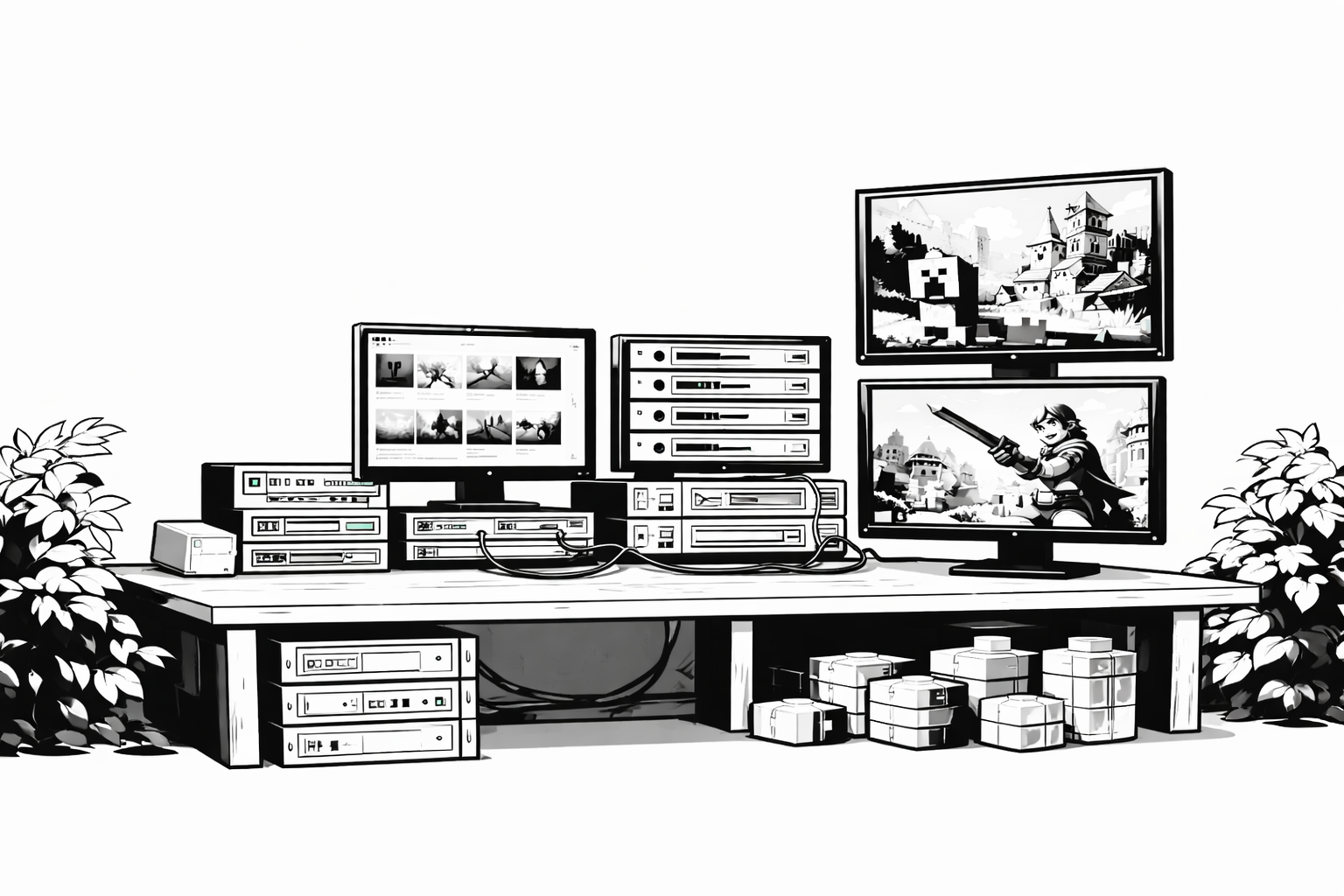
Every month my home lab shifts a little. Sometimes it is a new service, sometimes it is just tightening the bolts so everything runs cleaner and quieter. January 2026 is mostly about steady foundations, a bit of experimentation, and a couple of game servers that make the whole thing feel less like “infrastructure” and more like a living workspace.
Core apps I actually use
BetterNews is my custom news and RSS setup. It is built around the idea that reading the news should be fast, searchable, and not driven by engagement algorithms. If you want the deeper breakdown, I wrote up what it is and why I built it here: https://benny-water.com/better-news-rss-news-aggregator-app/
Immich handles photos. It is my “own cloud photos” solution, with machine learning running alongside it for indexing and search. It is one of those services that quietly becomes essential once it is stable.
Invoice Ninja is for invoicing and keeping the money side of projects organized. It is not exciting, but it removes friction, which is the whole point.
EspoCRM is in the lab as a CRM sandbox. It is where I can test workflows and structure before I commit to anything real. I like having a space where experiments do not contaminate production.
Jellyfin is the media server. It is simple, reliable, and fits the rest of the self hosted mindset.
n8n is where automation lives. If something needs to move data between systems, send alerts, or trigger a routine job, it usually ends up here.
Open WebUI, Kotaemon, and Ollama cover the local AI corner of the lab. Open WebUI is the interface, Ollama runs models on device, and Kotaemon is the “bring your own docs” knowledge base style layer. The goal is practical help without sending private data to external services. Some of it is pure productivity, some of it is just curiosity, and all of it stays under my control.
Terminal RPG is a self hosted game project I tinker with. Not everything in a home lab has to be serious. Sometimes the point is simply building something fun and learning along the way.
And then there are the multiplayer staples: Minecraft Server is the reliable classic, while the Hytale Server is there because I like being ready for new worlds when they show up. Both are also a good test for networking, backups, and performance under real use.
Infrastructure that makes the rest possible
On the plumbing side, Traefik handles routing and makes it easier to expose services cleanly without turning my network into spaghetti.
AdGuard Home is the quiet MVP. Network level ad blocking and DNS control makes everything feel calmer and faster.
Dockhand is part of keeping containers manageable without living in the command line 24/7.
PHP Apache is my general purpose web runtime. It is there because sometimes you just need a simple web service without reinventing anything.
Data and the supporting cast
A lot of the lab is only possible because the data layer is solid. I keep the usual trio around: MariaDB, Postgres, and Redis. Between those three, most apps have what they need, and I can choose the right tool without forcing everything into one database shape.
For the AI stack, I also have Pipelines for Open WebUI, which helps structure the “do this, then that” flow when I want repeatable, controllable behavior instead of one off prompts.
Why this setup works for me right now
The theme this month is control and repeatability. Most of these services exist because I want tools that feel stable, understandable, and mine. If something breaks, I can inspect it. If something needs to change, I can evolve it. And if a tool handles sensitive data, I can keep it local by default.
That is January. A mix of practical services, a small AI lab, and a couple of game servers to keep it human.
If you want, I can also turn this into a “Now running” section with a one line description per service, plus a quick diagram style outline you can drop into the post (Home, Core Apps, Infra, Data, AI).